
on truly independent film making…
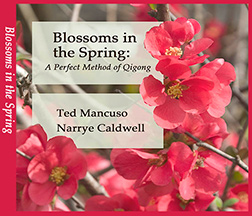
 Making a DVD like our recent Blossoms in the Spring is great; that’s to say it’s great fun and a great amount of work. When you are in the zone with just the film and the sound track with everything spread out in front of you like a jigsaw puzzle without the box cover you swear that this is the last time you will ever do this. Hours of filming and dozens of hours of editing crawl toward one another like drunken snails. You wanted to make that point or this, to illuminate that important idea and make sure that this or that exercise is described just right. These are after all instructional films so they are supposed to teach something. You have made a commitment, that IF you are going to try and teach through this medium you will actually be teaching, transmitting information. A film like this has to show everything clearly but, if you want to keep your teacher’s soul in tact, must not reduce real information to an a series of inarticulate burps.
 Catching the feeling of a teacher’s true style isn’t always easy. Even though many of our presenters are very experienced teachers with a lot of great information to pass along there’s always that delicate translation to a new medium. What’s hilarious or profound on the floor can sound like tired popcorn on film. Especially when filming people other than yourself, the occasional cloud of the unexpected passes overhead. The instructor with the monorail mouth suddenly can’t think of a thing to say. Another spends fourteen minutes talking about how to make a fist and thirty-five seconds explaining reverse reeling silk abdominal breathing. Of course it’s much easier when you film yourself because there is only one problem: you must be wearing someone else’s wardrobe because you could NOT POSSIBLY be that fat. (The only other consideration is what actually did happen to your hair? Is that supposed to mean something?)
 And then there’s setting for the film. No one has ever actually been blown off one of our Santa Cruz cliffs but that oceanic possibility has worried us sometimes. On the other hand when we go inside to film we wonder how exactly did our studio turn into a dingy closet and why can’t we do there what we’ve done there for the past two decades? (Sometimes we feel as though our main job is recording the number of dust bunnies we haven’t cleaned up.)
 Often the shock of recognition can be brutal. One teacher, seeing himself for a minute on film, remarked, “God, am I pompous!” You never know people reactions. A top expert who’s a good friend was giving an oral presentation on the history and practice of Kung Fu to a childrens’ class at a local Chinese community center. One boy continually raised his hand. When the lecturer finally called on him his burning question was, “What’s that little chain on your glasses for?” In you mind your presentation sounded like Edmund Burke, when you see it it’s barely Mister Ed.
The initially unnoticed is a persistent background story. Oh, you didn’t notice that road crew blowing up the old freeway either? Ah, that’s nice, back lighting that reduces me to a Balinese puppet actor. And the old standby, where’s the top of my head?
 It’s not as though everything goes wrong but, as the Imperial Japanese Head Gardener once pointed out, the secret of a great garden is clipping and removing. Making films like we do is an odd variation on being a sculpter. First you have to amass the marble THEN you get to remove everything that isn’t the finished product. You won’t generally know how close you’ve gotten before chiseling off that last scrap of stone. Then you put it out there and see if the pigeons land on it.
So, making a film, if you care about it, can be a laborious task.
Except, of course, the next one. The next one’s going to be easy, I just feel it.
Playing now in your home theaters…
click pic